


LESSONS IN NARRATIVE
How to shape your narrative
“No one ever made a decision because of a number.
They need a story.”
– Daniel Kahneman
Shaping narratives is an important—but often neglected—dimension of strategic communications. In this playbook, we explain narratives and how they operate, and suggest straightforward ways to manage narratives more strategically.
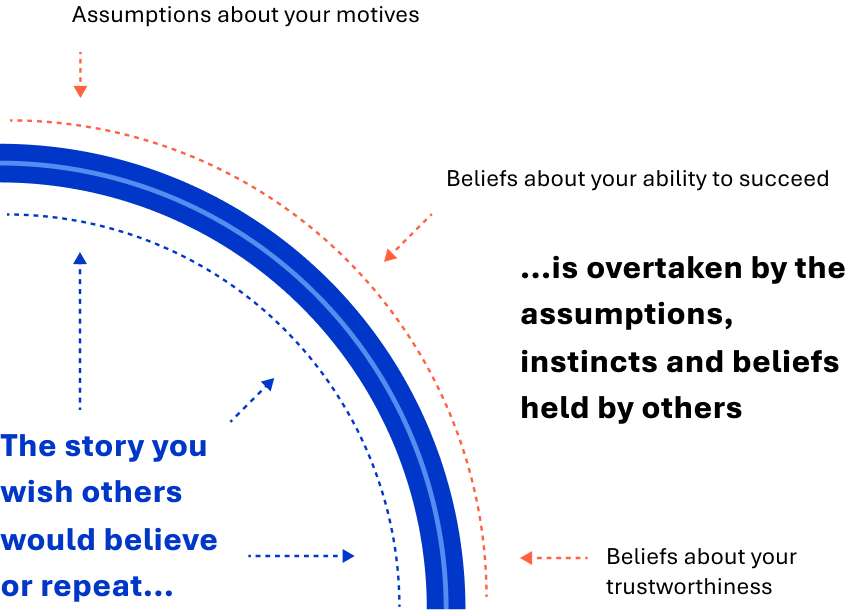
Audiences make sense of the blizzard of information, facts, and events that come their way by attaching them to a mental model they believe to be true. If a narrative doesn't exist, stakeholders will create one to deal with complexity. Think of narratives as logic structures: "Because of this, therefore this, which will lead to this." They connect past, present, and future—explaining motivations, predicting trajectories, conferring credibility. When the narratives held by stakeholders align with your goals, everything is easier: audiences do your work for you by filling in the blanks in ways that amplify your messages. Misaligned narratives, on the other hand, force you to work much harder for diminishing returns. Shaping narratives is therefore the highest responsibility of communications strategists.
What is a narrative?
The difference between messages and narratives
This is a common point of confusion: messages are specific words deployed for specific moments—an announcement, a campaign, a crisis response—whereas narratives are complete and comprehensive belief systems. Metaphorically speaking, messages are like boats you send toward a destination, while narratives are the currents that pull your messages forward or send them off course.
Messages
Narratives
Can be changed relatively quickly and easily.
Are built for the long term and are resistant to change.
Typically focused on conveying information or persuading.
Provide context and meaning for interpreting new information.
The mental frameworks or stories that people use to make sense of information.
The words, phrases, and statements used to communicate an idea or point of view.
Crafted and controlled by the communicator.
Exist in the minds of the audience, shaped by their experiences, beliefs, and cultural context.
Often implicit and unconscious.
Explicit and overt.
Building narratives takes more time than crafting messages—but narratives ensure that messages have durability and reach. The emergence of AI heightens the risk of flimsy or rushed message development which increases the need for intentional, deliberate narrative strategy. Here are the steps involved:
Practical steps toward shaping narratives.
Understand the prevailing narrative.
Your business is subject to one or more narratives that stakeholders use to interpret facts or events. Understand and analyze it.

Develop the structure of your ideal narrative.
An ideal story should connect the pieces of your business together. Define and build it.

Integrate and align your communications accordingly.
Your actions are feeding the narrative every day – many of them operating without a governing narrative. Align them.

Narrative architectures: all the pieces matter.
Building narrative architectures involves working through sequential story elements that ladder up to a bigger story. These building blocks should be enduring and evergreen. They should remain true across different cycles and circumstances. Different situations call for their own unique structures: advocacy narratives differ from investor narratives, which differ from industry positioning. For corporate narratives, we use the following framework:
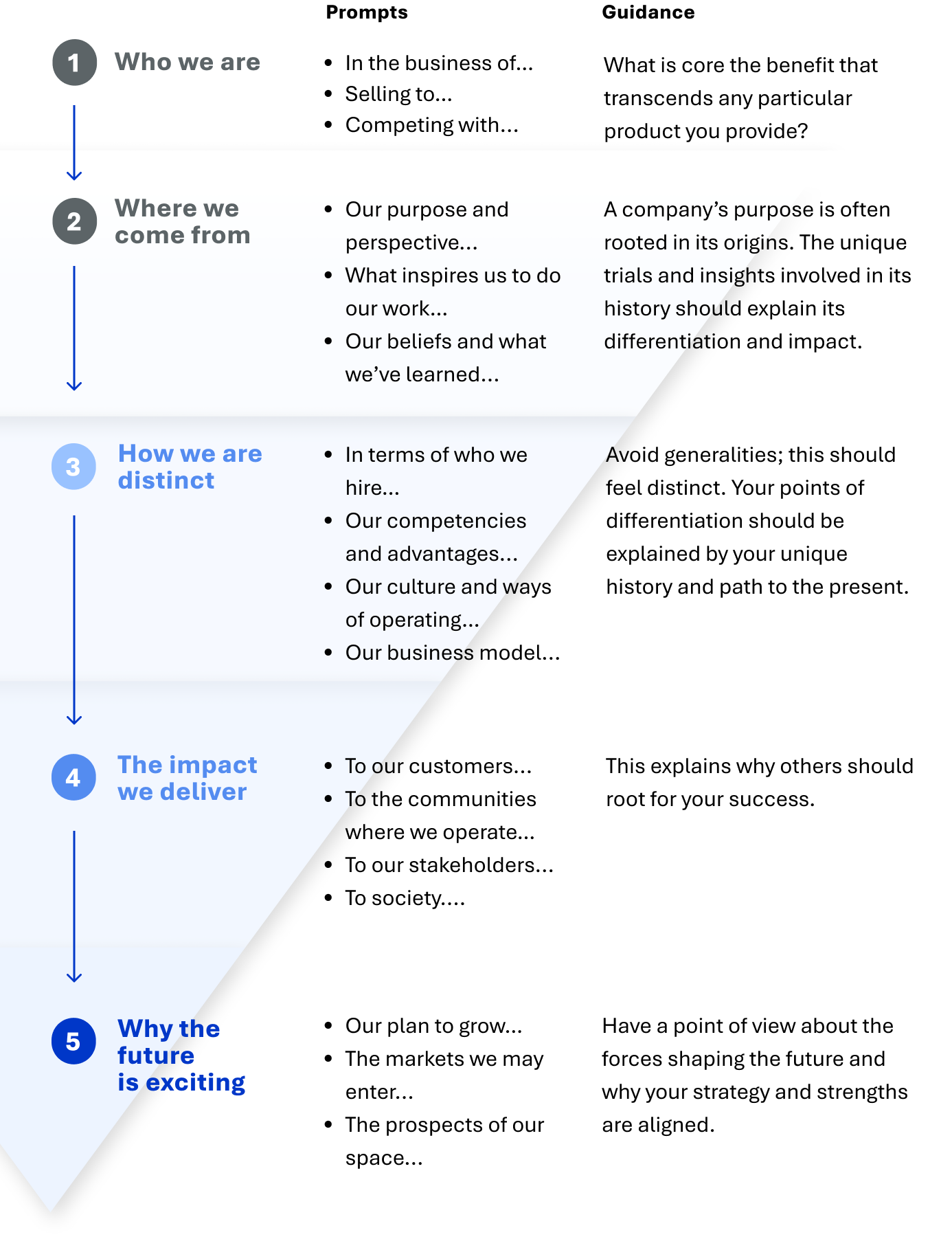
This process is simple but not always easy. In future Playbooks we’ll explain in more detail specific techniques for building strong narrative structures and shaping the stories others tell.